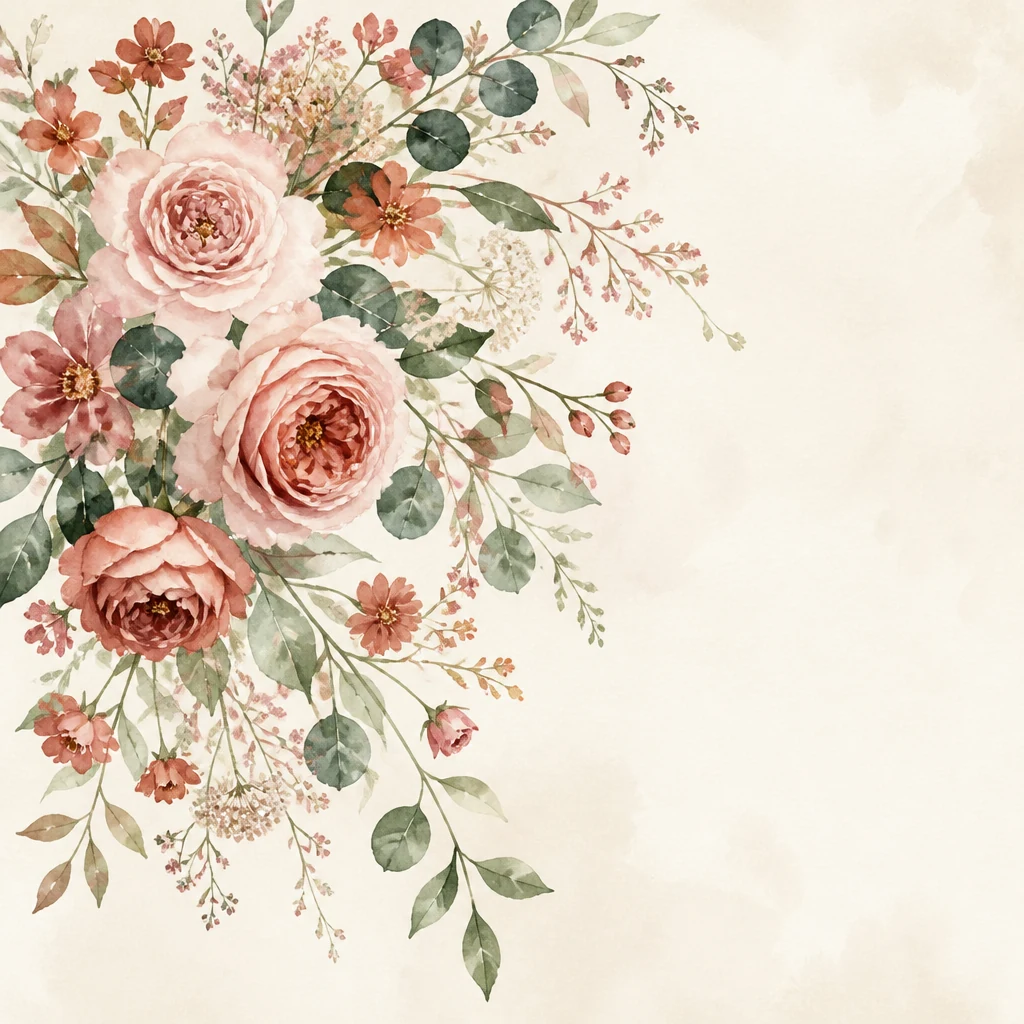
Floral Wedding Website Design Ideas
Flowers are the universal language of weddings — the first thing guests notice, the scent in the air, the detail in every photograph. So it's natural that couples want their wedding website to carry the same floral feeling. A floral design can whisper (a single illustrated stem in the corner) or sing (a full botanical watercolor background) — and either way, it connects the digital experience to the real one: the flowers your guests will see on the day.
This guide covers floral wedding website design ideas: the palettes, motifs, typography, and layouts that bring a botanical theme online — plus the discipline needed to keep floral design elegant rather than overwhelming.
The Range of Floral Design
Floral design spans a wide spectrum. Knowing the options helps you choose your register:
The subtle sprig. A single delicate illustration — a eucalyptus branch, a sprig of wildflowers — used in one or two places: beside the names, as a section divider, in the footer. The website is otherwise clean and minimal. This is the most versatile and safest floral choice: it reads as "floral" without competing with your photos.
The botanical border. A thin illustrated border of leaves and blooms framing the page — like the edge of a pressed-flower card. Romantic and decorative, while the center stays clear for content.
The watercolor wash. Soft watercolor blooms — roses, peonies, wildflowers — used as background washes, corner clusters, or full-bleed hero art. Dreamy and painterly. Keep the washes faint behind text.
The full garden immersion. The entire site feels like a garden: floral backgrounds, flower motifs throughout, botanical textures, and abundant greenery. Stunning when done well; the risk is readability and clutter. Use it for hero and accent screens, keep content screens calmer.
The pressed-flower aesthetic. Real pressed flowers and herbs, photographed or scanned, used as flat-lay decorations — the natural, craft-forward cousin of illustration. Feels handmade and personal.
The modern botanical. Clean geometric floral motifs — a stylized line-art bloom, a bold tropical leaf shape — used sparingly in a modern layout. Floral design without the romance clichés.
Palettes That Feel Fresh and Botanical
Flowers give you permission to play with color, but the palette still needs discipline:
Garden soft: sage, blush, and cream. The classic wedding-floral palette: muted sage green, soft blush, and warm cream. Fresh, romantic, and endlessly versatile. Works with nearly every flower scheme.
Wildflower: lavender, coral, and butter yellow. Brighter and more playful — the palette of a wildflower bouquet. Fresh and joyful; slightly less formal. Pair with plenty of white space so the color stays charming rather than loud.
Tropical: deep green, white, and a single bloom color. Monstera, palm, and oversized blooms. A white-and-green base with one saturated accent — fuchsia, orange, coral — feels lush and modern. Great for tropical and destination weddings.
Rustic: dusty rose, eucalyptus, and oat. Muted roses with eucalyptus green and warm oat/beige neutrals — the dried-flower palette. Warm, nostalgic, and gently rustic.
Botanical line art on cream. The most elegant option: delicate green line-art florals on a cream background with charcoal text. Clean, refined, and entirely readable — floral as illustration rather than color.
The palette rule for floral sites: two floral-derived colors max, plus a neutral. The flowers are the accent; the neutral (cream, white, or soft gray) carries the content.
Motifs and Illustrations
The flowers themselves are your design vocabulary. Choose a motif and use it consistently:
One hero bloom. A single flower or bloom style — your bridal flower, a peony, a rose — used throughout: in the hero, as a divider, in the monogram. One flower, repeated, gives the site identity.
The bouquet motif. A small illustrated bouquet or arrangement used as the site's emblem — top of the homepage, footer, RSVP confirmation. Like a crest, but botanical.
The stem divider. A thin illustrated stem or sprig as the divider between sections. Subtle, continuous, and elegant.
The leaf cluster. Corner clusters of leaves — eucalyptus, olive, ferns — framing key screens. Soft and organic.
The floral frame. A thin illustrated frame around photos or around the whole content column. Decorative but structured.
The accent rules: use the motif in two to four places per page, not twenty. Floral decoration is a seasoning, and the content is the meal.
Typography for Floral Sites
The type should complement the flowers without competing:
The romantic serif. A soft, warm serif — a bookish face with gentle curves — for headings and body. Floral sites suit serif-forward typography; the flowers supply the decoration, the type supplies the voice.
The script for names. A flowing script for your names and one or two accents — the date, a pull line. The calligraphic counterpoint to the botanical illustration. One script per page, max.
The clean sans for details. For logistical text — addresses, dates, RSVP links — a clean, highly legible sans. Flowers are romantic; RSVP details must be readable.
The botanical label style. Small-caps or letter-spaced labels ("OUR STORY," "THE DETAILS") in the floral green, used like plant labels. A subtle thematic touch.
The rule: two or three typefaces, with the script reserved for accents and the sans reserved for logistics. Legibility first — floral sites die when the romance wins over readability.
Layouts That Let Flowers Breathe
The hero with blooms. The homepage hero: your names and date, with a floral arrangement or illustration on one side, negative space on the other. Asymmetric and fresh — the flowers frame the names without hiding them.
The story in the garden. Your love story page with a soft floral border or watercolor corner, and photos presented like pages in a botanical journal. Captions in script or italic serif.
The garden gallery. Photos arranged with leaf sprigs or thin botanical frames — like a herbarium display. Clean grid, botanical accents in the gutters.
The details with stems. Schedule, travel, and FAQ pages with a single stem divider between sections — the floral presence continues on utility pages without overwhelming them.
The RSVP as a note. The RSVP page framed like a handwritten note on floral paper: a script welcome line, the form, a floral signature. Functional and romantic at once.
The rule: floral decoration is densest on the emotional pages (home, story) and lightest on the practical pages (FAQ, travel). Romance on the cover, clarity in the fine print.
Textures and Backgrounds
Watercolor paper. A soft watercolor-paper texture as the site background — the canvas for your painted blooms. Subtle and painterly.
Garden linen. A faint linen or canvas texture, warm and natural. Grounds the design like fabric.
Soft gradients. Gentle washes of the palette colors — a blush-to-cream gradient behind the hero. The screen equivalent of a watercolor wash.
Pressed flowers. Real pressed blooms and herbs as photographic background elements or in the gallery. Handmade warmth, especially lovely for craft-forward weddings.
The texture rule: textures must be barely-there behind content. If a background competes with text, it's decoration in the wrong place.
Photography for Floral Sites
Your photos and the floral design should feel like the same world:
- Include florals in the gallery — engagement photos with flowers, the ring shot on a bloom, the bouquet test run. The flowers in your photos reinforce the site's theme.
- Match the light. Soft, warm, natural light in photos matches the garden mood; harsh flash breaks it.
- Green and neutral clothing. If you're planning photos for the site, tones of green, cream, and blush sit perfectly in a floral design.
- Let the hero breathe. If the hero has an illustration, choose a photo with negative space for the other side. Balance, not collision.
Building a Floral Site From a Template
Most wedding platforms' templates lean romantic, which makes the floral direction accessible:
1. Pick the palette — sage, blush, cream (or your choice) — in the theme color settings. Editable themes make this a settings change. Platforms like Joyfullday let you adjust colors, fonts, and styling while keeping your RSVP, schedule, and gallery sections intact.
2. Add your floral motif — an illustration, a photo of pressed flowers, or a watercolor element — in the hero and as a divider. One source of floral art, used consistently.
3. Set the typography — warm serif, script accent, clean sans for details.
4. Write the copy with a garden voice — "we can't wait to grow our life together" in the welcome; the metaphor used once, warmly, not forced.
5. Curate photos that match the garden mood.
6. Test readability — floral backgrounds must never win over text.
Common Floral Mistakes
The wallpaper of blooms. A dense floral background behind everything — beautiful for a second, unreadable forever. Floral backgrounds belong behind the hero; content needs calm.
Mixed motifs. Peonies in the header, daisies in the dividers, sunflowers in the footer — the site reads as a flower shop, not a design. One motif, repeated.
Over-pink. Floral doesn't have to mean pink. Sage-and-cream botanical is fresh and modern; pink-everywhere tips into cliché.
Script-everywhere. Script headings plus script body plus script captions — unreadable. Script for names and accents only.
Forgetting the flowers are about your wedding. The site's florals should echo your real flowers — same color family, same style. If your wedding is sunflowers and the site is roses, the design and the day disagree.
Decoration over function. If the floral design makes the schedule hard to read or the RSVP hard to find, the design has failed. Beauty must serve function.
Frequently Asked Questions
Can floral design work for a modern or minimalist wedding? Yes — the modern botanical style pairs a single line-art floral motif with a clean layout. One sprig of eucalyptus and a lot of white space is both floral and minimal.
What if we don't have floral illustrations? Use photography — a beautifully shot bouquet, pressed flowers, or a macro of a bloom — as your motif. Real flowers are as good as painted ones.
How much floral is too much? If a guest can't find the RSVP link without searching, it's too much. Start with the subtle sprig and add only if the site feels too plain.
Should the website match our florist's palette? Ideally, yes — choose the site palette from your flower scheme so the digital and physical worlds agree. Ask your florist for the color story early.
Can floral work for a groom-led or co-designed site? The botanical line-art and modern botanical styles read as design-forward rather than exclusively romantic — clean lines, green accents, no pink. Floral has a range; pick your register.
Floral Design for Every Season
The flowers on your website can echo the season of your wedding, making the design feel rooted in the actual day:
Spring weddings call for soft, fresh palettes — blush, white, and pale green with delicate blooms like peonies, ranunculus, and tulips. Watercolor washes and light, airy layouts match the season's mood.
Summer weddings can be bolder — wildflowers, sunflowers, and dahlias in brighter palettes of coral, butter yellow, and fuchsia on cream. Full and lush motifs suit the abundance of summer.
Autumn weddings turn warm and rich — deep burgundy, burnt orange, ochre, and dried botanicals like pampas and wheat. The palette deepens and the illustrations feel more textured.
Winter weddings go elegant and cool — white blooms, amaryllis, evergreen, and touches of silver or gold on deep green or navy. The floral motif becomes spare and dramatic.
Whichever season you're in, draw the site's flowers from the flowers you'll actually carry and display. A website that previews the real arrangements — same blooms, same palette, same mood — feels like the wedding itself, in miniature, waiting for every guest who visits.
Final Thoughts
Floral wedding website design brings the garden online — connecting the site to the flowers your guests will smell, hold, and photograph on the day. Choose your register: a subtle sprig, a botanical border, a watercolor wash, or a full garden immersion. Build the palette from your real flowers, pick one motif and repeat it consistently, pair romantic serif and script with legible sans for details, and keep the decoration densest on emotional pages and lightest on practical ones. Done with restraint, a floral site feels fresh, romantic, and personal — a digital bouquet waiting for every guest who visits.